“Children need to learn to swim at their own pace, rushing through this process can cause stress and trauma. Like starting with a tricycle, then going to training wheels then finally riding a 2 wheel bike - allow the child to learn through play and take their time learning, the results are amazing and last a lifetime.”
Marcia Davis, expert swim instructor, author, Owner/Instructor Angelfish Swim School, former animal behaviorist/zookeeper and inventor of OSCAR
Instructions for OSCAR use, “Your Swim Buddy”:
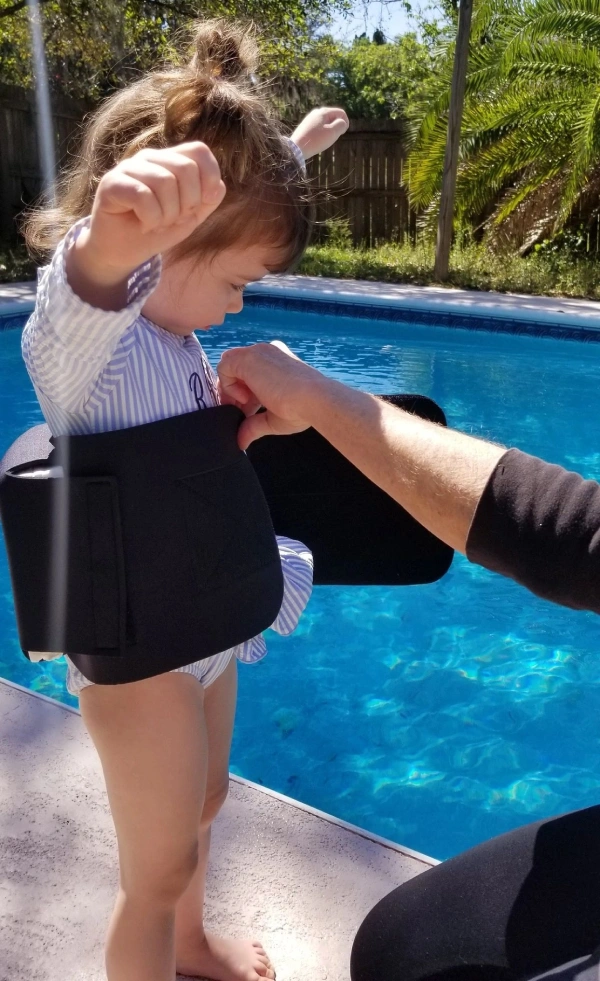
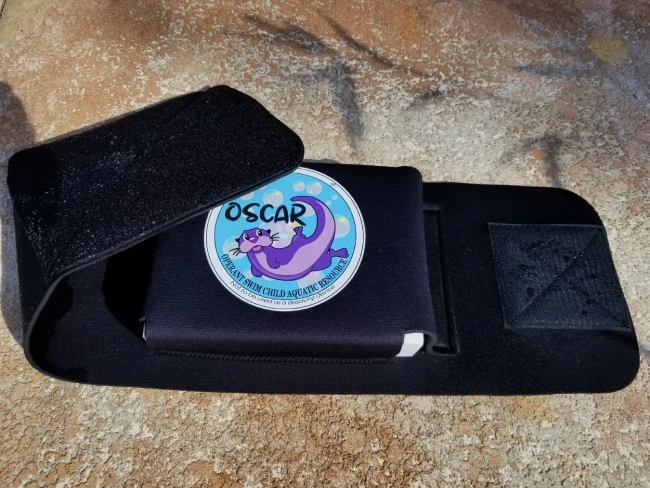
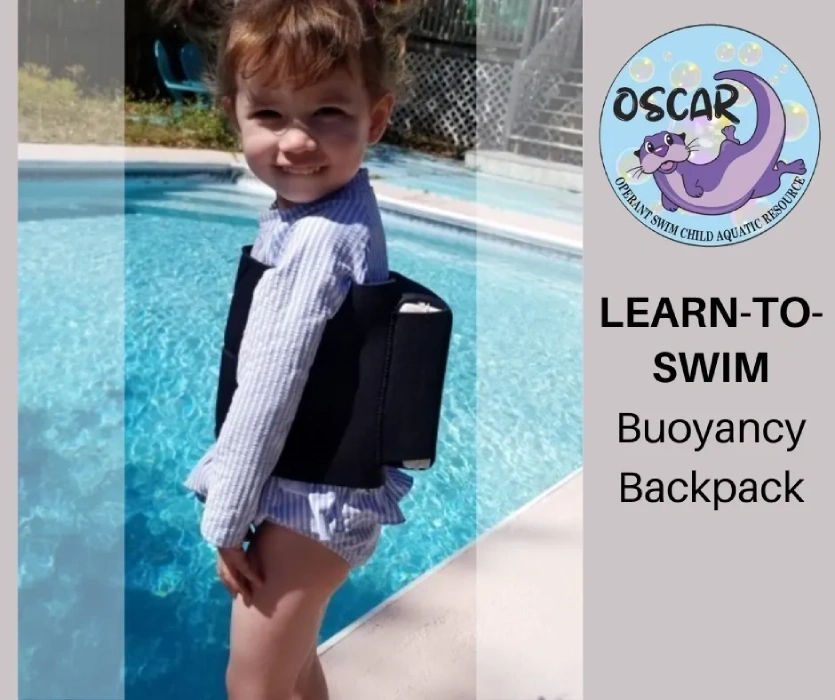
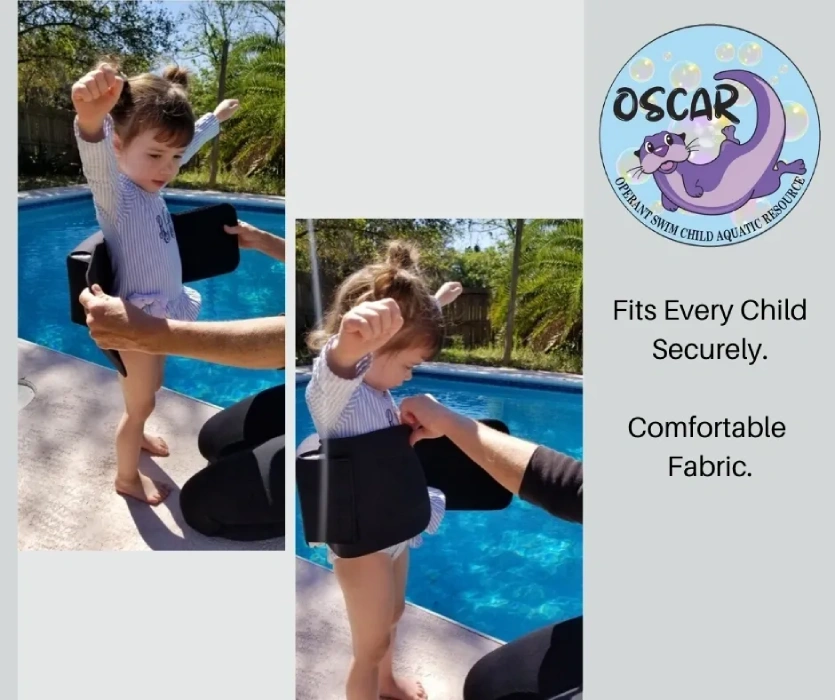
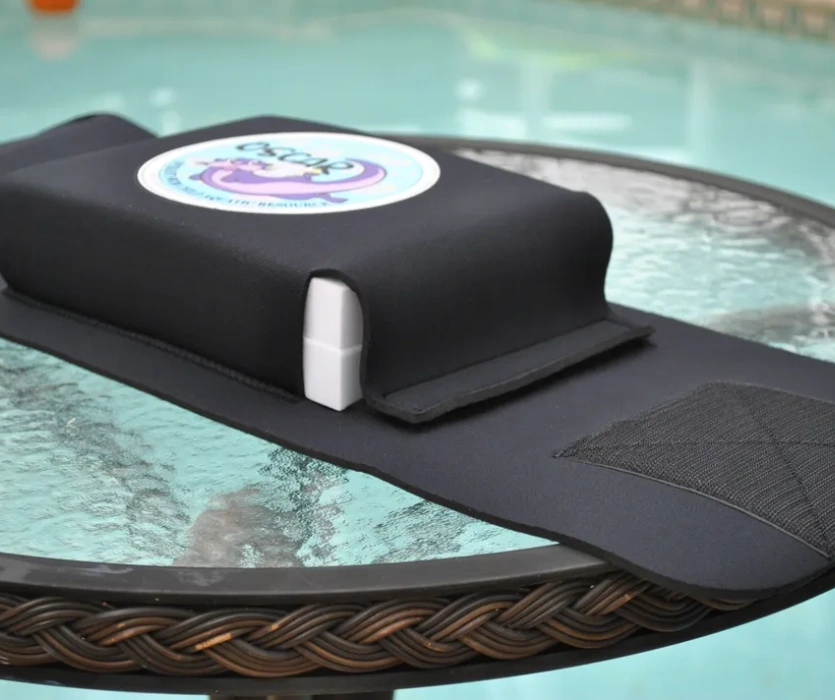
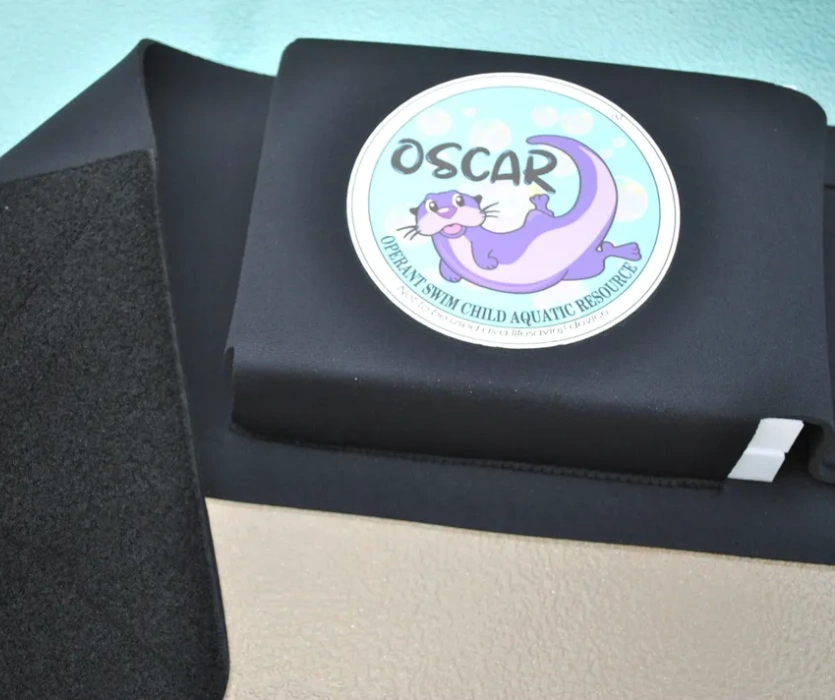
If you have a pool at home or in your community, your swim buddy OSCAR can help you teach your own little swimmer easily on your schedule and at a pace that is comfortable for the learner.
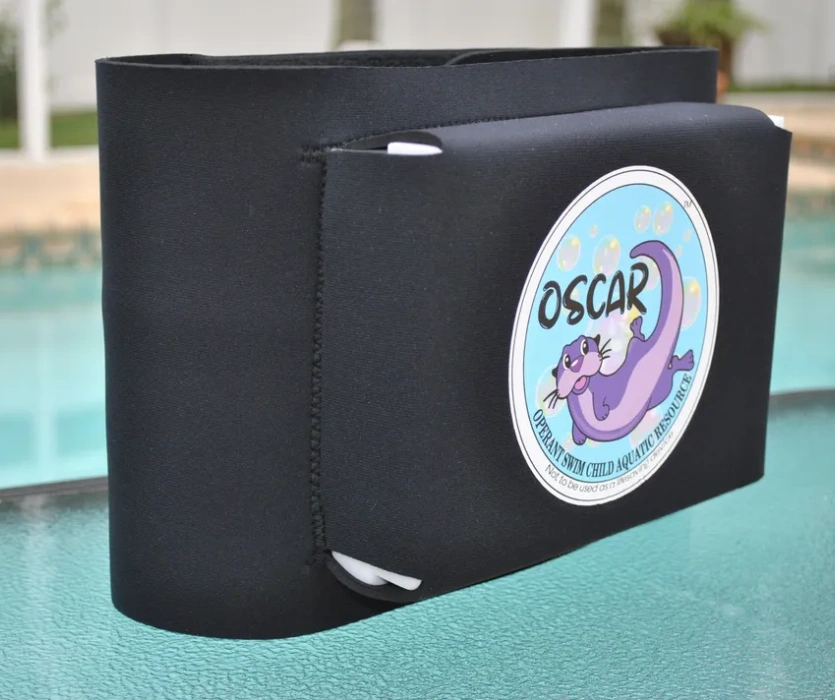
Our transitional, step down flotation design is recommended for children 2 1/2 years and up, 25 lbs plus and fits waist size up to 27” with extension pieces available for teens and adults.
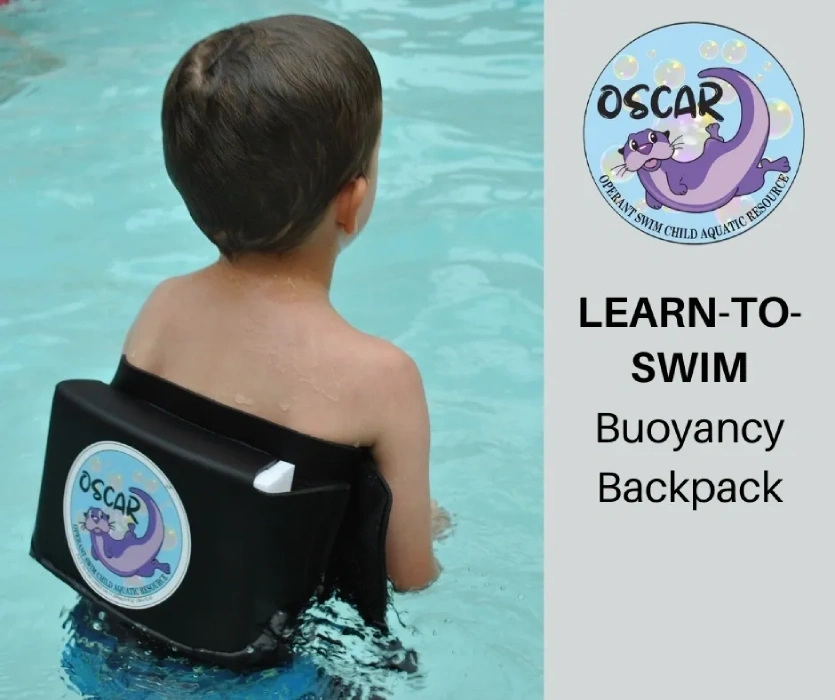
Of particular comfort to diverse and special needs learners, OSCAR provides a hugging effect, which is known to relieve stress and anxiety. Using assisted buoyancy, float reduction and self-paced learning, OSCAR helps create happy confident swimmers.
OSCAR’s design helps keep the swimmer in a horizontal position in the water, called the prone position and is the goal for every swimmer. The most important factor in early swimming skills is breath control, which requires learning how to inhale above the surface and slowly exhale (blow bubbles) while submerged. Using goggles, playing games, like finding toys on the steps, counting fingers and "looking under water" games are very helpful. Our first goal with breath control is face in with blowing bubbles for 3 seconds, working toward seven or eight seconds. Reaching arms forward and splashing feet behind on the surface really help to condition this important position.
It’s fun to be creative with games and interactions for teaching swimming. Here are some ideas I’ve used in class especially with timid students: Plastic eggs filled with small toys, coins, etc. The swimmer must put their face under while blowing bubbles in order to open the egg. Finding sinking toys or coins on the shallow steps together is a fun and excellent game for learning breath control.
Beginning her career at Miami Seaquarium, she had the honor to work with a diverse group of marine mammals
2650 Alturas Rd, Bartow, FL 33830
Mon - Fri: 09:00AM - 09:00PM
Sat: 09:00AM - 07:00PM
Sun: Closed